Article · Scripts
Common scripts beginners try first
There are many named hands, but a few recur on beginner supply lists and in introductory classes. Knowing what distinguishes them helps you pick one and stay with it long enough to improve.
Article · Scripts
There are many named hands, but a few recur on beginner supply lists and in introductory classes. Knowing what distinguishes them helps you pick one and stay with it long enough to improve.
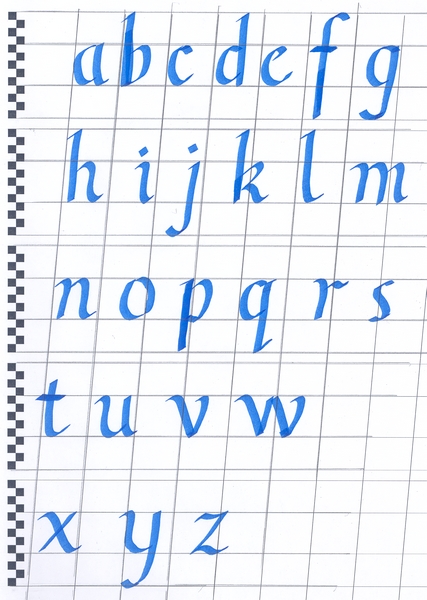
The three hands below cover the broad-edge and the brush routes, and each has plenty of free and printed models to copy. Picking one and sticking with it beats sampling all three at once.
| Script | Pen | Character |
|---|---|---|
| Foundational hand | Broad-edge | Upright, rounded, very legible; a common teaching script |
| Italic | Broad-edge | Slightly slanted, narrower, slightly springy rhythm |
| Modern brush lettering | Brush pen | Bouncy, thick-thin contrast from pressure, informal |
The foundational (or round) hand is built on simple, rounded shapes and an even pen angle, which is why it is so often used to teach broad-edge basics. Its letters are upright and open, so spacing errors are easy to see and correct. Many people learn it first precisely because it is unforgiving in a useful way.
Italic keeps the broad-edge pen but tilts the letters slightly and narrows them, giving a quicker, more rhythmic feel. Because a legible italic can also speed up everyday handwriting, it is a popular bridge between formal calligraphy and daily notes. The same pen and guidelines used for foundational work carry over.
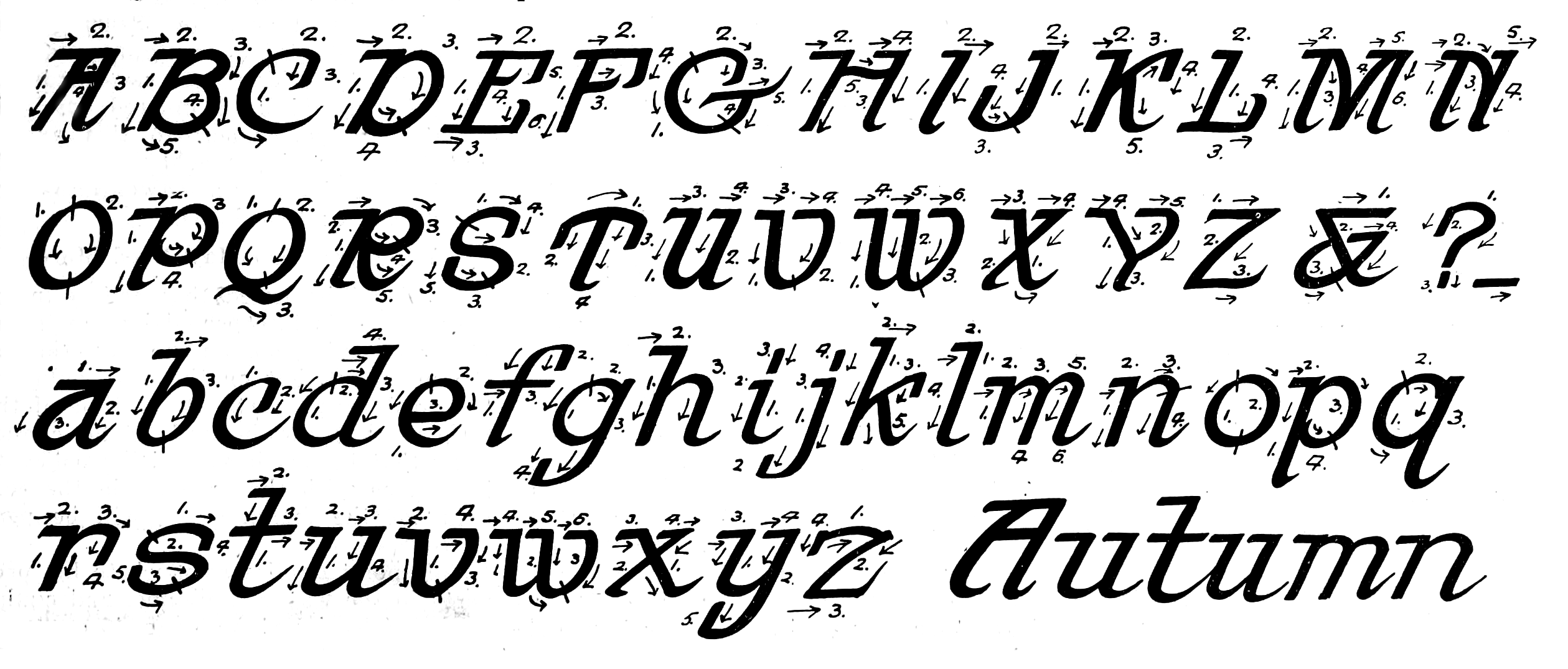
A historic italic specimen. Source: Wikimedia Commons (public domain).
Modern brush lettering uses a flexible brush pen, with line width controlled by pressure rather than a fixed edge. It is looser and more personal than the broad-edge hands, which makes it approachable but also easy to let drift. Working over light guidelines keeps the bounce intentional instead of accidental.
Which first? If you want classical letters and steady fundamentals, start with the foundational hand. If you are drawn to the casual, bouncy style seen on cards and signage, start with brush lettering. Either choice teaches transferable habits.
Public libraries, community centres and college continuing-education programs across Canada periodically run beginner calligraphy and lettering workshops, which can be a low-commitment way to try a script with a tutor before buying much equipment. Local guilds and art societies sometimes host practice meetups as well. Availability varies by city and season, so check current local listings rather than assuming a fixed schedule.