Article · Technique
Stroke order basics
A letter that looks effortless is usually built from a handful of simple strokes laid down in a set order. Learning the order first makes the letters themselves much easier.
Article · Technique
A letter that looks effortless is usually built from a handful of simple strokes laid down in a set order. Learning the order first makes the letters themselves much easier.
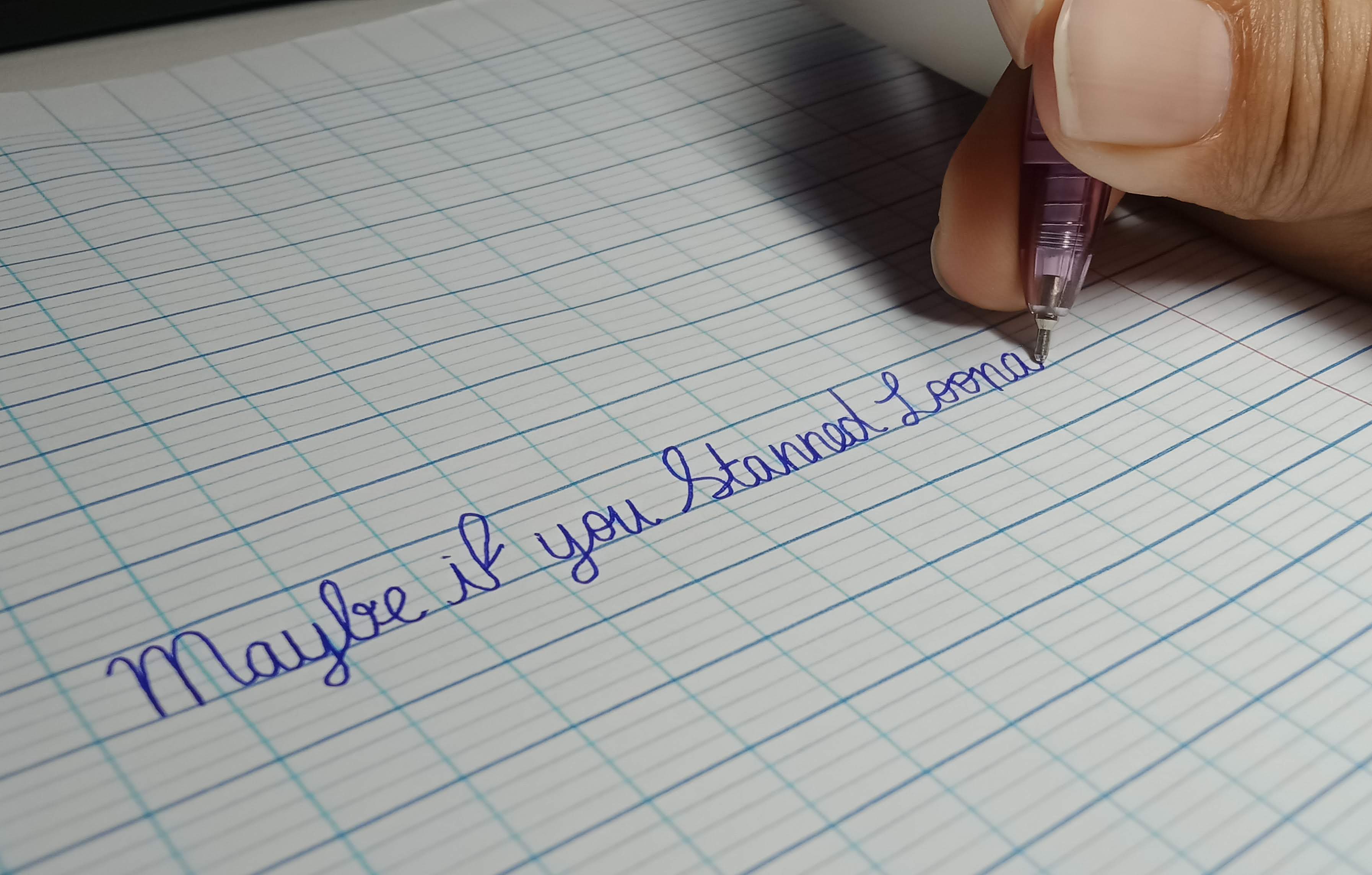
Consistent stroke order does three quiet jobs. It keeps the spacing between strokes even, it lets the pen lift and reset at the same points every time, and it builds muscle memory so the hand stops deliberating mid-letter. When two people copy the same alphabet but in different orders, their letters often drift apart in rhythm even when each individual shape is fine.
Most beginner alphabets are taught as combinations of a few repeated marks. Drilling these on their own, before assembling letters, is the standard first exercise in many classes.
Try this drill. Fill one line with downstrokes, one with ovals, and one alternating the two, keeping the gaps between strokes equal. Even spacing matters more here than perfect shapes.
Reading a single letter as numbered steps shows how the parts come together. The exact count varies by script, but the principle holds: build the body, then add the supporting stroke.
It helps to think of practice as repeating stages rather than chasing a finished page. The pills below name a loop you can run for any letter or word.
Beginners often write too fast and press too hard. Slowing down lets each stroke land where the model puts it, and a lighter touch protects flexible nibs and brush tips. With broad-edge pens, keep the pen angle steady through the whole stroke rather than rotating the hand; with pointed pens and brushes, add pressure only on the downstroke and release on the way up.
Short, regular sessions tend to build steadier letters than occasional long ones, because stroke order is a motor habit. A few minutes of basic-stroke drills before writing words is a common warm-up.